Contact centres are evolving faster than ever, and contact centre AI is at the heart of this transformation. AI-powered solutions enable instant, personalised, and seamless support across every channel, reducing wait times and repetitive interactions. The AI-driven call center benefits are clear: improved customer experience, greater operational efficiency, and enhanced agent performance.
This guide explains what contact centre AI is, how it works, and the concrete advantages it delivers for modern customer service.
Modern contact centres rely heavily on cutting-edge technology to handle large volumes of customer interactions efficiently. Using distributed computing networks and high-performance processing allows AI systems to deliver real-time responses without delays. Resources like advanced computing methods for faster customer service automation show how technology can scale AI operations across multiple channels seamlessly. Similarly, understanding how supercomputing frameworks enhance artificial intelligence processing speed helps contact centres handle complex datasets, enabling personalized support at every touchpoint.
Alongside technology, effective marketing strategies are essential for maximizing the impact of AI in customer support. Implementing comprehensive online marketing strategies to showcase AI-powered customer experience tools ensures that potential clients are aware of the convenience and speed these solutions provide. Additionally, learning about practical digital marketing approaches for promoting contact centre automation online can help businesses attract the right audience and communicate the benefits of AI-driven support.
Financial planning also plays a crucial role in implementing AI successfully. Using strategic financial resources for investing in AI infrastructure and operational upgrades allows businesses to budget effectively, ensuring long-term ROI and sustainable improvements in customer service quality. By combining technology, marketing, and finance, contact centres can fully leverage AI to deliver faster, more personalized, and efficient support, creating better experiences for both customers and agents.
Top 10 Contact Centre AI Platforms
Choosing the right contact centre AI solution can transform your customer service operations. From automating routine tasks to providing personalized support, AI in contact centres is reshaping how businesses engage with customers. Here’s a look at the top 10 platforms leading the way in 2025.
1. Bright Pattern
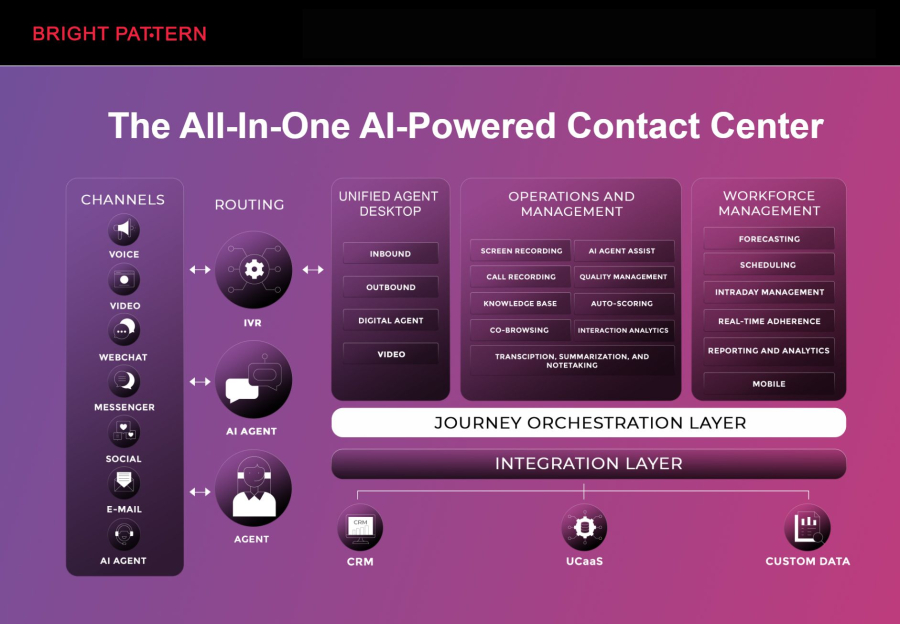
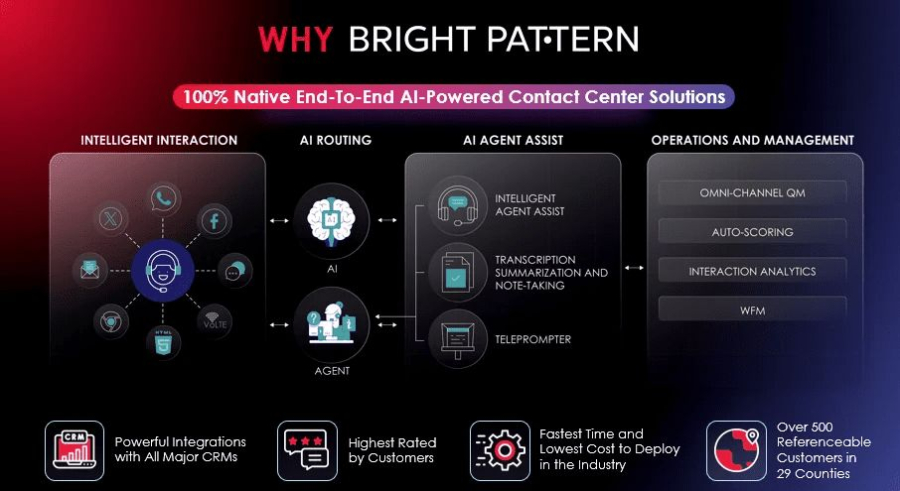
Bright Pattern is a comprehensive contact centre AI platform designed to enhance customer experience, streamline operations, and empower agents. Its cloud-based architecture allows businesses to deploy AI-powered omnichannel support quickly and scale as needed.
Key features include:
- AI-driven chatbots and virtual assistants for instant support
- Real-time agent assistance with predictive analytics
- Omnichannel integration across voice, email, chat, and social media
- Advanced reporting to track performance and customer satisfaction
- Seamless CRM and business system integrations
Businesses leveraging Bright Pattern can reduce wait times, increase first-call resolution rates, and deliver personalized experiences at scale, making it one of the most effective solutions for modern contact centre AI needs.
2. Genesys
Genesys provides AI-enabled customer engagement solutions that focus on routing, automation, and analytics. Its AI tools help predict customer needs and optimize agent performance.
3. Five9
Five9 uses AI to automate workflows and improve call handling efficiency. Its platform integrates with CRM systems and supports intelligent routing and predictive dialing.
4. NICE inContact
NICE inContact offers AI-driven analytics, automated interactions, and real-time agent guidance to deliver seamless customer experiences.
5. Talkdesk
Talkdesk leverages AI to enhance self-service, provide agent recommendations, and improve customer journey analytics across multiple channels.
6. Avaya
Avaya’s AI contact centre solutions provide virtual assistants, speech analytics, and automation to optimize customer support and reduce operational costs.
7. Cisco Contact Center
Cisco Contact Center integrates AI for chatbots, voice recognition, and predictive routing to improve efficiency and satisfaction.
8. 8x8
8x8 offers cloud contact centre solutions powered by AI, enabling omnichannel communication and intelligent workflow automation.
9. Zendesk
Zendesk uses AI for automated ticketing, chatbots, and agent assistance, enhancing customer support capabilities for enterprises of all sizes.
10. RingCentral
RingCentral’s AI contact centre features include automated interactions, speech analytics, and omnichannel support to streamline service operations
What Is Contact Centre AI?
Contact centre AIis a set of artificial intelligence technologies that enhance or automate customer interactions in a contact centre. It supports both customers and human agents by understanding language, predicting needs, automating routine tasks, and surfacing the right information at the right time.
Rather than replacing agents, modern AI acts as a powerful assistant. It handles repetitive work, guides conversations, and frees humans to focus on complex, high-value interactions that build loyalty.
Key Components of Contact Centre AI
Contact centre AI is not a single tool. It is a combination of several capabilities that can be used together or adopted step by step.
1. Virtual Agents and Chatbots
Virtual agents(sometimes called intelligent virtual assistants or chatbots) are AI-powered systems that can interact with customers via voice or text. They use natural language understanding to recognise what a customer wants and then respond, guide, or complete actions.
- Answer common questions, such as billing, orders, and account details.
- Collect information before transferring to a human agent.
- Handle simple transactions, like password resets or appointment changes.
- Offer 24/7 self-service without increasing staffing costs.
2. Natural Language Understanding (NLU) and Natural Language Processing (NLP)
NLUandNLPallow systems to understand, interpret, and generate human language. In a contact centre, they power features like:
- Recognising a caller's intent from spoken phrases.
- Understanding variations in how customers ask the same question.
- Extracting key pieces of information from long messages.
- Generating clear responses that feel natural and relevant.
3. Speech Analytics and Real-Time Transcription
Speech analyticstools listen to and analyse calls. They can transcribe conversations in real time, detect sentiment, and look for patterns across thousands of interactions.
- Identify common reasons for contact, such as product issues or billing confusion.
- Spot emerging topics before they become widespread problems.
- Monitor customer sentiment to flag at-risk accounts.
- Support coaching with real examples from successful calls.
4. Intelligent Routing
AI-powered routinggoes beyond simple skills-based rules. It can match customers to the best available resource using real-time context, historical data, and predicted needs.
- Automatically route VIP customers to top-performing agents.
- Match callers with agents who have solved similar issues successfully.
- Balance workloads to reduce wait times and avoid burnout.
- Improve first-contact resolution by connecting customers to the right person first time.
5. Agent Assist and Knowledge AI
Agent assisttools support agents during live interactions. They listen, interpret, and provide recommendations, so agents do not need to search through multiple systems while trying to serve a customer.
- Real-time suggestions for the next best action or response.
- Instant access to relevant articles or policies from a knowledge base.
- Automatic summaries of conversations and outcomes.
- Guided workflows that reduce errors and handle time.
6. Predictive Analytics and Workforce Intelligence
Predictive analyticsuses historical data and AI models to forecast what will happen in the future. In a contact centre, this supports smarter planning and proactive experiences.
- Forecast contact volumes across channels.
- Identify periods of high demand and schedule staffing accordingly.
- Predict which customers may need support before they reach out.
- Spot training opportunities based on performance patterns.
Top Business Benefits of Contact Centre AI
When these capabilities are combined in a thoughtful way, they transform both the customer experience and the internal operation of the contact centre.
1. Faster, More Convenient Customer Service
AI dramatically reduces effort for customers. Virtual agents, self-service flows, and intelligent routing make it simple to get answers quickly, anytime.
- Reduced wait timesthanks to automated handling of routine enquiries.
- 24/7 availabilitywithout needing to staff every hour of every day.
- Omnichannel consistencyacross voice, chat, email, and messaging apps.
- Instant informationbecause AI systems can pull data from across your ecosystem in seconds.
2. Higher Customer Satisfaction and Loyalty
When customers are understood quickly and receive relevant help on the first attempt, satisfaction naturally improves. AI helps ensure that each interaction feels more personalised and less repetitive.
- Recognising returning customers and their history.
- Using context from previous interactions to avoid repetitive questions.
- Offering proactive support when a problem is likely to occur.
- Delivering consistent quality regardless of day, time, or channel.
3. Increased Agent Productivity and Engagement
Contact centre AI is a powerful ally for agents. It reduces manual work and cognitive load, so agents can focus on building relationships and solving complex problems.
- Less time spent on searching, typing notes, and repeating standard information.
- Guided workflows that help new agents ramp up quickly.
- Automated summaries, after-call work, and disposition suggestions.
- More fulfilling work as agents handle fewer repetitive, low-value contacts.
4. Lower Operational Costs
By automating high-volume, low-complexity tasks, AI helps contact centres handle more interactions without expanding headcount at the same rate.
- Deflection of simple queries to self-service tools and virtual agents.
- Shorter average handle time as AI assists with information and next steps.
- Fewer repeat contacts due to better first-contact resolution.
- More accurate forecasting and scheduling based on predictive analytics.
5. Better Insights for Continuous Improvement
AI turns every interaction into usable insight. Instead of sampling a small portion of calls manually, you can analyse nearly all conversations across channels.
- Understand customer needs, frustrations, and expectations in real time.
- Identify trends that inform product, pricing, and policy decisions.
- Pinpoint training opportunities and replicate top-performer behaviours.
- Measure sentiment and experience indicators across the full customer journey.
Common Use Cases for Contact Centre AI
There are many ways to apply AI in a contact centre. The most successful programmes focus on high-impact, high-volume use cases first.
Self-Service for Routine Enquiries
One of the fastest wins is using AI to create intelligent self-service journeys for common requests.
- Order status and delivery updates.
- Basic account information and balance queries.
- Password resets and profile changes.
- Simple appointment booking or rescheduling.
Intelligent Triage and Call Containment
AI-powered virtual agents can greet customers, understand their intent, and either resolve the issue or route them intelligently.
- Gather key details at the start of the conversation.
- Authenticate the customer using secure methods.
- Route based on product, language, priority, or complexity.
- Contain straightforward requests without human intervention.
Real-Time Agent Assistance
During live calls or chats, agent assist tools can provide on-screen support, reducing search time and ensuring consistent responses.
- Suggesting answers to common questions as they appear in the conversation.
- Highlighting relevant policy paragraphs or knowledge articles.
- Offering prompts for compliance or required disclosures.
- Providing next best actions based on customer history.
Quality Management and Coaching
AI can automatically assess interactions against agreed criteria and surface targeted feedback.
- Score calls for empathy, clarity, compliance, and resolution.
- Alert supervisors when calls show high frustration or escalation risk.
- Identify top agents and surface their best practices.
- Recommend personalised coaching for each agent based on their patterns.
Proactive Customer Outreach
Using predictive models, contact centre AI can help you act before customers encounter issues.
- Notifying customers about delays, outages, or changes with helpful options.
- Reaching out to customers whose behaviour suggests they may churn.
- Offering tailored upsell or cross-sell options with clear value.
- Inviting feedback at the right time to strengthen the relationship.
How Contact Centre AI Works in Practice
At a high level, contact centre AI follows a clear flow: it understands, decides, and acts.
Step 1: Understanding the Customer
The AI system captures what the customer says or types, then interprets it using NLU and context.
- Convert speech to text if the interaction is a voice call.
- Identify key intents, like "check order status" or "cancel subscription".
- Extract important details, such as dates, locations, or amounts.
- Combine with existing profile and history to create a complete picture.
Step 2: Deciding on the Best Action
Next, business rules and AI models decide what should happen.
- Can this request be resolved fully through self-service?
- Does the customer need to speak to a specific agent or team?
- Is there a proactive offer or solution that fits the situation?
- What information or guidance will the agent need if escalated?
Step 3: Acting and Learning
Finally, the system responds and learns from the outcome.
- Provide the answer or execute the requested action.
- Escalate to a human with full context and conversation history.
- Capture data about whether the interaction was resolved.
- Use outcomes to refine models and improve future performance.
Key Metrics to Track for Contact Centre AI Success
To unlock the full value of contact centre AI, measure its impact using clear, business-aligned metrics.
Metric | What It Measures | AI Impact |
First Contact Resolution (FCR) | Share of issues solved in a single interaction. | AI routing, agent assist, and self-service improve resolution quality. |
Average Handle Time (AHT) | Time agents spend per interaction. | Agent assist and automation reduce searching and manual tasks. |
Containment Rate | Percentage of interactions resolved by AI without human handoff. | Shows how effective virtual agents and self-service flows are. |
Customer Satisfaction (CSAT) | Customer rating of their experience. | Faster, more accurate support increases perceived value. |
Net Promoter Score (NPS) | Likelihood to recommend your brand. | Consistently positive experiences build long-term loyalty. |
Agent Engagement | How motivated and satisfied agents feel. | Less repetitive work and better tools lead to higher engagement. |
Practical Steps to Get Started with Contact Centre AI
Adopting contact centre AI does not have to be overwhelming. A phased, outcome-focused approach works best.
1. Clarify Your Objectives
Start by defining what you want to achieve, such as:
- Reducing wait times and improving service levels.
- Deflecting basic queries to self-service channels.
- Boosting agent productivity and reducing burnout.
- Gaining deeper insight into customer behaviour and needs.
2. Identify High-Value Use Cases
Analyse your current contact data and look for patterns.
- Which enquiries are most frequent, simple, and repetitive?
- Where do customers experience the longest waits or friction?
- Which steps in the agent workflow consume the most time?
- Where could better information or routing unlock quick wins?
3. Start Small, Then Scale
Begin with a focused pilot, such as an AI chatbot for one specific category or an agent assist tool for a single team.
- Define success criteria before you launch.
- Monitor performance, gather feedback, and refine flows.
- Gradually expand coverage to more topics and channels.
- Share positive outcomes to build buy-in across the organisation.
4. Involve Your Agents Early
Agents are central to successful AI adoption. Involving them from the start both improves the tools and strengthens engagement.
- Invite agents to help design conversation flows and knowledge content.
- Use their expertise to define realistic, helpful responses.
- Train agents on how AI supports, not replaces, their work.
- Encourage continuous feedback on what is working and what to refine.
5. Continuously Optimise
Contact centre AI is not a one-time deployment. It improves as you iterate.
- Regularly review conversation transcripts and performance reports.
- Refine intents, flows, and routing rules based on new patterns.
- Update knowledge content to reflect product or policy changes.
- Expand into new languages, channels, or regions as you grow.
Real-World Outcomes You Can Expect
Organisations that adopt contact centre AI in a structured way commonly report outcomes such as:
- Significantly higher self-service usage and reduced inbound volume for basic issues.
- Noticeable reductions in average handling time as agents receive better support.
- Improved satisfaction scores thanks to faster, more accurate responses.
- Higher agent morale, with teams spending more time on meaningful interactions.
- Stronger insight into customer trends, feeding into product and service improvements.
Positioning Your Contact Centre for the Future
The contact centre is no longer just a cost centre. With AI, it becomes a strategic hub for customer insight, loyalty, and revenue growth. When you combine the empathy and expertise of human agents with the speed and intelligence of AI, you deliver experiences that are convenient, personalised, and consistently high quality.
By starting with clear goals, selecting high-value use cases, and involving your people at every stage, you can build a modern contact centre that delights customers, empowers agents, and delivers measurable business results.
Contact centre AI is not just about answering questions faster. It is about reshaping how your business listens, responds, and builds lasting relationships at every touchpoint
